Hypoglycemia vs. Hyperglycemia in Type 1 Diabetes: What Every Reader Should Know
Quick Summary
This article explains the difference between hypoglycemia (low blood sugar) and hyperglycemia (high blood sugar) for people living with Type 1 Diabetes, their caregivers, and anyone newly diagnosed. You will learn what causes each one, how to recognize the symptoms, what to do in the moment, and when a high or low crosses into a medical emergency. Whether you are the person checking your own glucose meter or the parent watching for signs in your child, this guide is meant to make the whole picture easier to hold.

Key Takeaways
Hypoglycemia (low blood sugar) generally means a reading below 70 mg/dL (3.9 mmol/L), while hyperglycemia (high blood sugar) is typically a reading above 180 to 250 mg/dL depending on context.
In Type 1 Diabetes, both highs and lows can happen quickly because the body makes little to no insulin of its own, which removes the natural buffer that non-diabetic bodies rely on.
The 15-15 rule is the standard first response to a low: 15 grams of fast-acting carbs, wait 15 minutes, recheck.
A high blood sugar reading with moderate or high ketones is a warning sign for diabetic ketoacidosis (DKA) and needs urgent medical attention.
One high or low reading does not mean you have failed. Patterns matter more than single numbers.
Caregivers and support people play a real role in recognizing symptoms, especially in children or anyone who cannot always communicate what they are feeling.
Editor's Note
There was a time when I dreaded checking my blood sugar because I never knew which number I'd see, or what it would mean about how well I was "doing." Somewhere along the way I learned that highs and lows are not verdicts on my character. They're information. A low tells me my body needs sugar right now. A high tells me something needs adjusting, whether that's insulin, food, stress, or timing. Neither one means I failed at managing my diabetes. If you've ever felt your stomach drop at a number on a meter, I hope this article helps you see it a little differently.
Introduction
If you live with Type 1 Diabetes, you already know that blood sugar rarely sits still. It moves throughout the day based on food, insulin, stress, sleep, hormones, activity, and sometimes nothing you can point to at all. Two of the most common experiences you'll navigate are hypoglycemia, when blood sugar drops too low, and hyperglycemia, when it climbs too high.
These two conditions can feel like opposite ends of the same rope, and in many ways they are. But they come with different warning signs, different causes, and different first steps. Understanding both, clearly and without fear, is one of the most practical things you can do for yourself or for someone you love who lives with T1D.
This guide walks through what each condition is, how to recognize it, what causes it specifically in Type 1 Diabetes, and what to do when it happens. It's written for people managing their own diabetes, for parents and partners supporting someone else, and for anyone newly diagnosed who is still learning the language of this condition.
What Is Hypoglycemia?
Hypoglycemia means blood sugar has dropped below a safe level, generally under 70 mg/dL (3.9 mmol/L). In Type 1 Diabetes, this usually happens because there is more insulin in the body than the body currently needs, whether from a dose that was slightly too high, a meal that was smaller or later than planned, or physical activity that used up glucose faster than expected.
Recognizing the Signs of a Low
Symptoms often show up quickly, sometimes within minutes, and can range from mild to severe.
Mild to moderate signs:
Shakiness or trembling
Sweating, even when not hot
Sudden hunger
Dizziness or lightheadedness
Fast or pounding heartbeat
Irritability, anxiety, or mood changes
Pale skin
Trouble concentrating
Severe signs (require immediate action):
Confusion or slurred speech
Blurred or double vision
Loss of coordination
Seizures
Loss of consciousness
Not everyone experiences every symptom, and some people, especially those who have lived with T1D for many years, can develop something called hypoglycemia unawareness, where the usual warning signs become less noticeable. This is one reason continuous glucose monitors (CGMs) with low alarms have become such a valuable tool for many people.
What Causes Lows in Type 1 Diabetes
Taking more insulin than the body needed for the food eaten
Delaying or skipping a meal or snack after taking insulin
Exercise or physical activity, especially unplanned or more intense than usual
Drinking alcohol, particularly without food
Hot weather or hot showers, which can affect insulin absorption
Errors in carb counting
How to Treat a Low: The 15-15 Rule
Check your blood sugar if a meter or CGM is available.
Consume 15 grams of fast-acting carbohydrate. Options include 4 ounces of juice, 4 to 5 glucose tablets, a tablespoon of honey, or half a can of regular (non-diet) soda.
Wait 15 minutes, then recheck.
If still below 70 mg/dL, repeat the process.
Once blood sugar is back in a safe range, eat a small snack with protein if the next meal is more than an hour away.
If someone is unconscious or unable to swallow safely, do not attempt to give food or liquid by mouth. Administer glucagon (injectable or nasal spray) if available, and call emergency services immediately.
What Is Hyperglycemia?
Hyperglycemia means blood sugar has risen above a healthy range. There is not one universal cutoff, since targets vary by individual and by context, but many care teams use above 180 mg/dL (10 mmol/L) after meals or above 250 mg/dL (13.9 mmol/L) as a threshold that warrants closer attention and ketone checking.
Recognizing the Signs of a High
Highs tend to build more gradually than lows, though they can still develop over just a few hours.
Extreme thirst
Frequent urination
Fatigue or unusual tiredness
Blurred vision
Headache
Dry mouth
Difficulty concentrating
Because these symptoms build slowly, they're sometimes easier to dismiss or explain away, which is part of why regular monitoring matters so much in T1D.
What Causes Highs in Type 1 Diabetes
Missing or delaying an insulin dose
Illness or infection, which raises blood sugar even without eating
Stress, which triggers hormones that increase glucose
Expired or improperly stored insulin
Pump site issues, such as a kinked cannula or air bubble, in those using insulin pumps
Eating more carbohydrates than the insulin dose covered
The dawn phenomenon, a natural rise in blood sugar in the early morning hours caused by hormone shifts
How to Respond to a High
Check for ketones using a urine or blood ketone test, especially if blood sugar is persistently above 250 mg/dL.
Drink water, aiming for at least 8 ounces per hour if tolerated.
Take a correction dose of insulin if that is part of your prescribed plan.
Avoid additional carbohydrates until levels come back down.
Recheck blood sugar every 2 to 3 hours.
Call your care team if:
Blood sugar stays high despite a correction dose
Ketones are moderate to high
You are vomiting or unable to keep fluids down
Why This Matters More in Type 1 Diabetes
In Type 2 Diabetes, the body still produces some insulin, which can act as a partial buffer against extreme swings. In Type 1 Diabetes, the immune system has stopped the pancreas from producing insulin altogether, which means every rise and fall in blood sugar depends almost entirely on external insulin, food timing, and activity. There is less built-in cushioning, so both highs and lows can happen faster and swing further.
This is also why diabetic ketoacidosis (DKA) is a particular concern in Type 1 Diabetes. Without any insulin, the body starts breaking down fat for fuel, which produces ketones. In large amounts, ketones make the blood dangerously acidic.
Warning Signs of DKA
Nausea, vomiting, or abdominal pain
Fruity-smelling breath
Deep, rapid breathing
Confusion or extreme fatigue
High blood glucose combined with moderate to high ketones
DKA is a medical emergency. It cannot be treated at home. If you or someone you love shows these signs, go to the emergency room or call emergency services right away.
A related condition called hyperosmolar hyperglycemic state (HHS) involves very high blood sugar and severe dehydration, and is more commonly seen in Type 2 Diabetes, though awareness of it is still worth having.
Hypoglycemia vs. Hyperglycemia: A Side-by-Side Look
Hypoglycemia (Low) | Hyperglycemia (High) | |
General threshold | Below 70 mg/dL (3.9 mmol/L) | Above 180–250 mg/dL (10–13.9 mmol/L) |
Onset | Fast, often within minutes | Gradual, over hours |
Common symptoms | Shaking, sweating, hunger, confusion | Thirst, fatigue, frequent urination |
Immediate step | 15 grams fast-acting carbs | Water, check ketones, correction insulin if prescribed |
Emergency version | Loss of consciousness, seizure | DKA: fruity breath, vomiting, rapid breathing |
Emergency response | Glucagon, call emergency services | Emergency room, call emergency services |
Common Myths About Blood Sugar Swings
Myth | Reality |
"A low or high means you did something wrong." | Blood sugar is affected by dozens of factors, many outside your control, including hormones, stress, and illness. |
"You'll always feel a low coming on." | Some people develop hypoglycemia unawareness over time, which is why CGMs and regular checks matter. |
"High blood sugar isn't urgent unless you feel bad." | Ketones can build even before symptoms feel severe, especially in T1D. |
"Once you treat a low, you're done." | Blood sugar can dip again, which is why rechecking after 15 minutes matters. |
Preventing Extreme Swings: Practical, Everyday Habits
Prevention is rarely about being perfect. It's about building small, repeatable habits that reduce how often extreme highs and lows happen.
Keep fast-acting carbs within reach at home, at work, in the car, and in a school bag.
Use a CGM or regular fingersticks consistently, especially around exercise, illness, or schedule changes.
Plan for exercise by checking blood sugar before and after activity, and adjusting insulin or snacks accordingly.
Build a sick-day plan with your care team before you need it. Illness can raise blood sugar even without eating.
Rotate insulin sites and check pump equipment regularly if you use one.
Communicate with school or work about your condition so others know how to help if needed.
Wear a medical ID so that in an emergency, first responders know you have T1D.
For Caregivers and Support People
If you're caring for a child, partner, or loved one with T1D, your role in recognizing symptoms is real and valuable, even if you're not the one checking the meter. Learn the signs of both highs and lows. Know where the glucagon is kept and how to use it. Ask your loved one what a low or high tends to feel like for them specifically, since it can look different from person to person.
If you're building your own emergency preparedness kit, keeping fast-acting glucose, a sugar source, and a written ID card together in one bag makes a real difference in a stressful moment. It's one of the simplest things you can put together today. And if you're newly diagnosed and still learning the basics, Lynnove's diabetes education library was built exactly for this stage, to walk alongside you as the language and routines start to feel less overwhelming.
Living With This 🤍
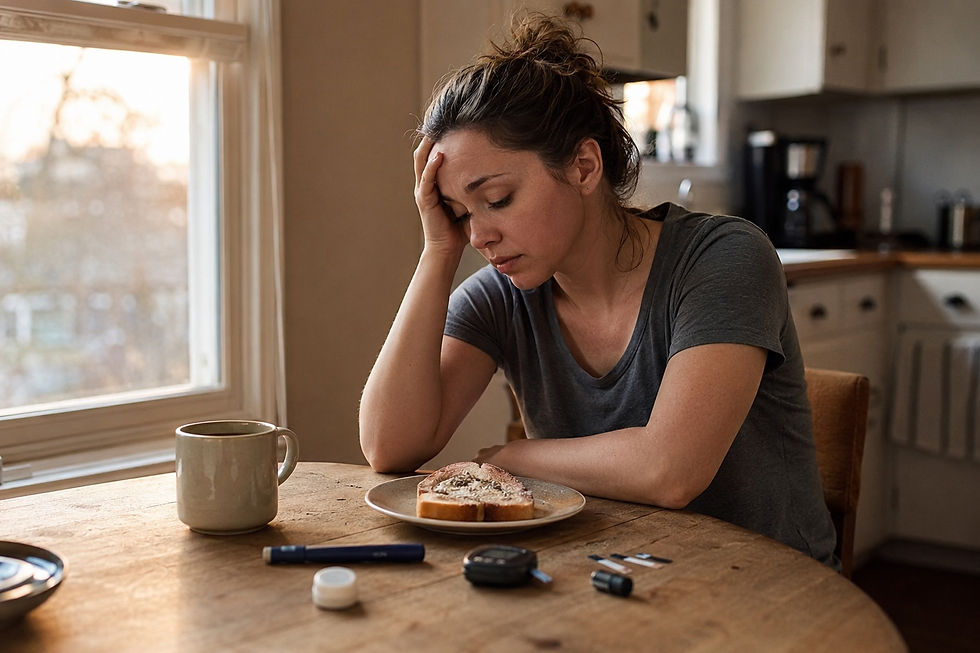
There is a version of living with Type 1 Diabetes that doesn't show up on a glucose meter. It's the quiet dread before a number loads on the screen. It's the exhaustion of a low at 3 a.m. It's the frustration of a high that came out of nowhere despite doing everything "right." It's explaining, again, to a teacher or a coworker or a friend, what a low actually feels like and why it can't wait.
If you've felt any of that, you're not imagining it, and you're not alone in it. Blood sugar swings ask a lot of a person, physically and emotionally. Some days will feel manageable. Some days will feel like too much. Both are part of the real, human experience of living with this condition, and neither one defines how well you're doing.
Key Takeaways (Recap)
Remember:
✔ Hypoglycemia (low) generally means below 70 mg/dL and needs fast-acting carbs right away.
✔ Hyperglycemia (high) builds more gradually and needs water, monitoring, and ketone checks.
✔ In Type 1 Diabetes, both can happen quickly because the body makes little to no insulin of its own.
✔ DKA is a medical emergency. Fruity breath, vomiting, and rapid breathing require immediate care.
✔ One reading is information, not a judgment. Patterns over time matter more than any single number.
Frequently Asked Questions
What blood sugar level is considered a low emergency? Most care teams consider anything below 54 mg/dL (3.0 mmol/L) a severe low requiring urgent treatment, and any level below 70 mg/dL should be treated promptly with fast-acting carbohydrate.
Can hyperglycemia happen even if I take my insulin correctly? Yes. Illness, stress, hormones, pump site issues, and even the dawn phenomenon can raise blood sugar even when insulin dosing was accurate.
How long does it take for a low to come back up after treatment? Most people see improvement within 15 minutes of consuming 15 grams of fast-acting carbs, which is why the 15-15 rule includes a recheck at that mark.
Is it normal to have highs and lows even with a CGM? Yes. A CGM helps you catch and respond to swings faster, but it doesn't eliminate them. Both highs and lows remain a normal part of living with T1D.
What's the difference between DKA and a regular high? A regular high is elevated blood sugar without significant ketones. DKA involves high blood sugar combined with moderate to high ketones and symptoms like vomiting, abdominal pain, and rapid breathing. DKA requires emergency care.
Should children with T1D carry their own glucose tablets? Many care teams recommend children carry fast-acting carbs age-appropriately, alongside a clear plan shared with teachers, school nurses, or caregivers who know how to help.
Can stress alone cause a high blood sugar reading? Yes. Stress hormones like cortisol and adrenaline can raise blood sugar even without any change in food or insulin.
When to Seek Medical Help
Contact your care team or seek emergency care if:
Blood sugar remains high despite a correction dose of insulin
Ketones are moderate to high
You experience vomiting and cannot keep fluids down
Signs of DKA appear: fruity breath, rapid breathing, confusion, severe abdominal pain
A severe low leads to loss of consciousness or a seizure
Hypoglycemia does not improve after two rounds of the 15-15 rule
When in doubt, it's always appropriate to call your doctor or go to urgent care. You know your body, or your loved one's patterns, better than anyone reading this article.
Trusted Resources
American Diabetes Association (ADA) – Standards of Care guidelines on glucose targets and emergency management
Centers for Disease Control and Prevention (CDC) – Diabetes testing and monitoring basics
World Health Organization (WHO) – Global diabetes overview and care priorities
National Institute of Diabetes and Digestive and Kidney Diseases (NIDDK) – Patient-friendly condition overviews
Beyond Type 1 – Community-driven T1D resources and lived-experience support
Conclusion
Hypoglycemia and hyperglycemia are two sides of the same daily reality for anyone living with Type 1 Diabetes. They ask for attention, preparation, and a bit of grace, both for the body managing them and the person living inside that body. Knowing the signs, understanding the causes, and having a clear plan for both a low and a high doesn't remove the unpredictability of T1D entirely, but it does make each moment feel a little more manageable.
Wherever You Are Today...
Whether you're newly diagnosed, have been living with Type 1 Diabetes for years, or are here supporting someone you love, I hope this article helped make the highs and lows feel a little clearer, and a little less frightening.
Living with diabetes isn't always easy, but understanding it can make each step feel a little less overwhelming.
If you're ever unsure how to handle a low or a high, or you just need someone to talk to about how heavy this can feel some days, please reach out. You don't have to carry this alone.
Thank you for spending part of your day with Lynnove.
We're grateful you're here.
Here, your light always shines🤍
If this article helped you feel more informed or a little less alone, consider sharing it with someone who may need it too.
You can also explore more diabetes education, practical guides, recipes, and wellness resources throughout Lynnove.
No pressure. Just an invitation.


Comments